

Tattoo Symbols and Their Meanings: What Nobody Tells You Before the Needle Hits
I watched a guy walk out of a shop last week with “STRENGHT” tattooed across his chest.
The artist had been doing this for 12 years. The client had approved the stencil. They both looked at it twice. Nobody caught it until three days later when his girlfriend pointed it out.
This is how most tattoo regrets start—not with bad artistry, but with the gap between what you think a symbol means and what it actually represents on your skin for the next 60 years.
Here’s what I learned from talking to artists, covering hundreds of walk-ins, and making a few mistakes myself: the problem isn’t finding a meaningful symbol. It’s understanding what meaning actually survives contact with reality.
The Myth of Universal Meaning (And Why Your Artist Won’t Correct You)
Walk into any shop and ask what a lotus means. You’ll hear “spiritual enlightenment” or “rising from the mud.”
Both technically true. Also completely useless.
A tattoo artist in Portland told me she’s done maybe 200 lotus tattoos. She asked every client why they wanted it. The answers ranged from “I saw it on Instagram” to “I’m Buddhist” to “I just got divorced and wanted something about new beginnings.”
Same flower. Wildly different emotional weight.
Here’s the thing most symbol guides won’t tell you: traditional meanings only matter if they connect to something you’ve actually lived through.
I’ve seen people get phoenix tattoos who’ve never overcome anything harder than a bad semester. The symbol doesn’t make you resilient—it just sits there reminding you that you thought it would.
Meanwhile, I know someone with a simple line drawing of a broken fence who says it represents escaping an abusive home. Nobody knows what it means by looking at it. But she does. And that’s the entire point.
Real Artist Horror Stories (That Teach You Everything)
Let me share what actually happens in shops:
The Japanese Kanji Disaster
An artist in Vancouver told me about a client who came in with a kanji character they found online. It was supposed to mean “warrior spirit.”
The artist, who doesn’t read Japanese, tattooed it. Clean work. Client loved it.
Two months later, a Japanese customer saw it at the gym and started laughing. Turns out it meant “chicken soup.”
The original client had screenshotted a Google Translate result without triple-checking. The internet lied. Now he’s walking around with soup permanently inked on his ribcage.
The Semicolon Situation
You know the semicolon tattoo—mental health awareness, “my story isn’t over,” all that.
An artist I know in Brooklyn refuses to do them anymore. Not because they’re not meaningful, but because she got tired of doing 15 in a day on people who’d clearly just seen it trending on TikTok.
She said: “I’d ask them what it meant to them personally. Half couldn’t answer beyond ‘it’s about mental health.’ When I pushed deeper—like, what’s YOUR connection to it—they’d get defensive or admit they just thought it looked cool and meant something good.”
She now only does semicolons if you can tell her a specific moment in your life that symbol represents. Not the generic meaning. YOUR story.
The Backwards Logo
This happened last year at a shop in Austin. Client wanted his favorite car brand logo—spent $400 on a detailed chest piece.
Artist did beautiful work. Client approved everything. Walked out happy.
Came back two days later, furious. The logo was mirrored. Backwards. Like he was looking at it in a mirror.
Both the artist and client had stared at it for hours and nobody noticed because when you’re looking at a chest tattoo on a person, your brain doesn’t flag it the same way it would on a car.
They fixed it. But it required a coverup that cost another $600 and doesn’t look as clean as the original.
The “Whitey” Incident
This one’s legendary in certain circles. A young woman wanted her name—Whitney—tattooed across her lower back in fancy script.
Artist generated the font. She approved the stencil. Three separate times, she looked at it and said yes.
He tattooed “WHITEY” across her back. Nobody noticed until she got home and her roommate said “why does your tattoo say Whitey?”
The “n” had gotten dropped during the font conversion process. Artist felt terrible. Client was sobbing. Her two friends came back to the shop ready to throw hands.
They covered it with three giant roses for free. The artist didn’t come to work for a week after.
Honest mistake. Catastrophic result.
What These Stories Actually Tell You
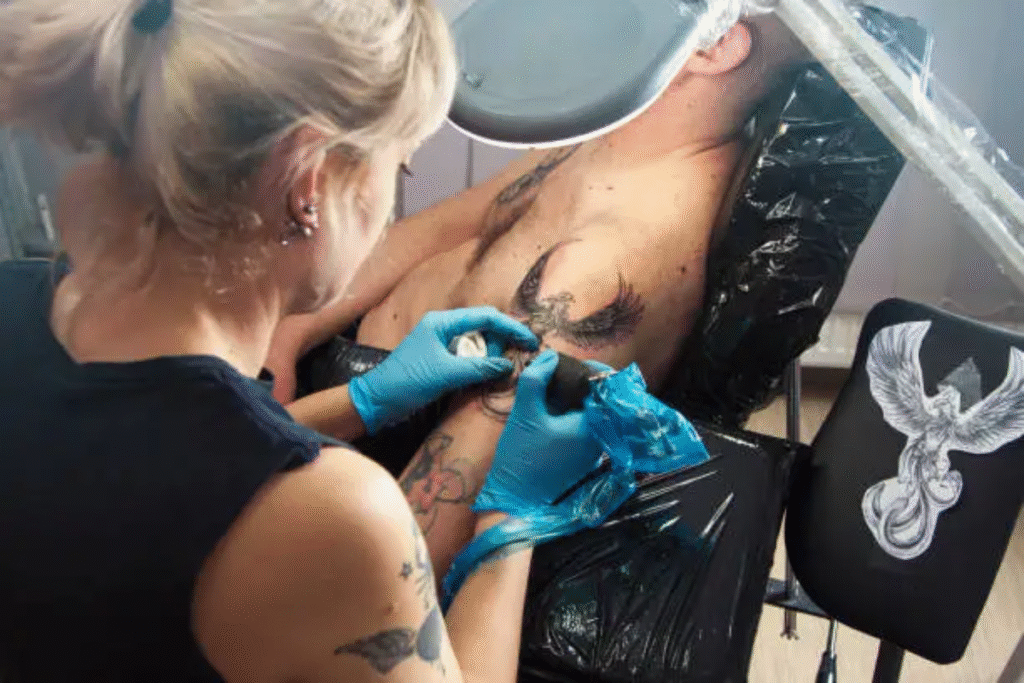
It’s not about blaming the artist or the client. It’s about understanding that meaning is fragile and verification is your job.
Artists can guide you. They can warn you if something looks off culturally. But they’re not fact-checkers, translators, or therapists.
You want a symbol that means something? Do the work:
Research it beyond the first Google result. Find multiple sources. If it’s from another culture, talk to someone from that culture—not just to avoid appropriation, but to understand context you’ll never get from a blog post.
Ask yourself if the meaning you’re assigning is something you’ve earned or something you’re hoping the tattoo will give you. One sticks. The other fades into regret.
Check the spelling. Then check it again. Then have two other people check it. Then check it one more time after the stencil goes on.
Deep Meaningful Tattoo Symbols (That Actually Hold Up)
Let’s talk about symbols that work because they’re flexible enough to grow with you while still carrying weight.
The Compass Rose (But Not How You Think)
Everyone gets compasses to mean “finding your direction” or “guidance.” Fine. Overdone, but fine.
Better move: get a compass that points to a specific set of coordinates. Where you were born. Where you found yourself. Where someone important died. Where you got sober. Where you fell in love.
Now it’s not generic navigation symbolism—it’s a permanent marker of a place that changed you. The symbol becomes data, not decoration.
I know someone who has a compass on their forearm pointing to the exact coordinates of the hospital where they survived a suicide attempt. Nobody knows unless they ask. But they know. And when they’re struggling, they look at it and remember they’ve already found their way back once.
The Broken Chain
Chains mean imprisonment. Broken chains mean freedom.
But here’s where most people stop thinking: freedom FROM WHAT?
An addict in recovery getting broken chains has a different emotional weight than someone who broke free from family expectations or religious trauma or a toxic relationship.
The symbol is the same. The depth comes from what you attached to it before you broke it.
One guy I talked to got broken chains after leaving a cult. The chains are wrapped around an anchor—because he wanted to remember that being grounded isn’t the same as being trapped. Anchors hold you steady. Chains hold you down.
That distinction? That’s what makes a symbol work long-term.
Kintsugi Cracks (Gold Repair)
This is the Japanese art of fixing broken pottery with gold so the breaks become part of the beauty.
As a tattoo: a realistic-looking crack running across your skin—wrist, collarbone, wherever you feel fractured—filled with metallic gold ink.
It says “I broke, I fixed myself, and I’m more valuable because of the repair work.”
Here’s why it works better than generic strength symbols: it acknowledges the damage. You’re not pretending to be unbreakable. You’re showing the break lines and claiming them as part of your design.
I’ve seen this done on self-harm scars, surgical scars, and even just on unblemished skin as a metaphor. All of them worked because the person wearing it understood what breaks they were representing.
Symbols of Strength (Beyond Lions and Eagles)
Everyone wants to telegraph strength. Most people do it by copying someone else’s idea of what strength looks like.
Here’s what actually communicates resilience:
The Bent But Not Broken Tree
Not a tree standing tall and perfect. A tree bent by wind, scarred by lightning, missing branches—but still growing.
There’s a Japanese concept called fukinsei—the beauty of asymmetry and irregularity. Trees that survive storms don’t look Instagram-perfect. They look like they’ve been through something.
Get a tree that shows damage. Twisted trunk. Broken branches sprouting new growth. Roots exposed but still gripping earth.
That’s strength. Not the absence of damage, but continuing despite it.
The Mountains With Elevation Markers
Everyone gets mountain tattoos for “overcoming obstacles.” Cool. Which obstacles?
Better version: each peak in your mountain range represents a specific challenge you climbed. Mark the elevation as the year you conquered it.
Example: First peak = 2019 (year you graduated). Second peak = 2021 (year you left a bad relationship). Third peak = 2024 (year you got sober).
Now your “strength symbol” is actually a biographical timeline. It’s not borrowing someone else’s meaning—it’s documenting your own.
The Mycelium Network
This one almost nobody knows yet, which means it’s still unique.
Mycelium is the underground fungal network that connects trees and lets them share nutrients. You can’t see it, but it’s why forests survive.
As a symbol: strength through connection. Community. The people who held you up when you couldn’t stand alone.
Get it designed as fine-line root-like patterns spreading from a central point. Looks organic and abstract until someone asks what it is. Then you get to explain that your strength isn’t about being a lone warrior—it’s about being connected to something bigger.
This works because it rejects the toxic “self-made” narrative most strength symbols push.
Symbols of Love (That Won’t Haunt You After a Breakup)
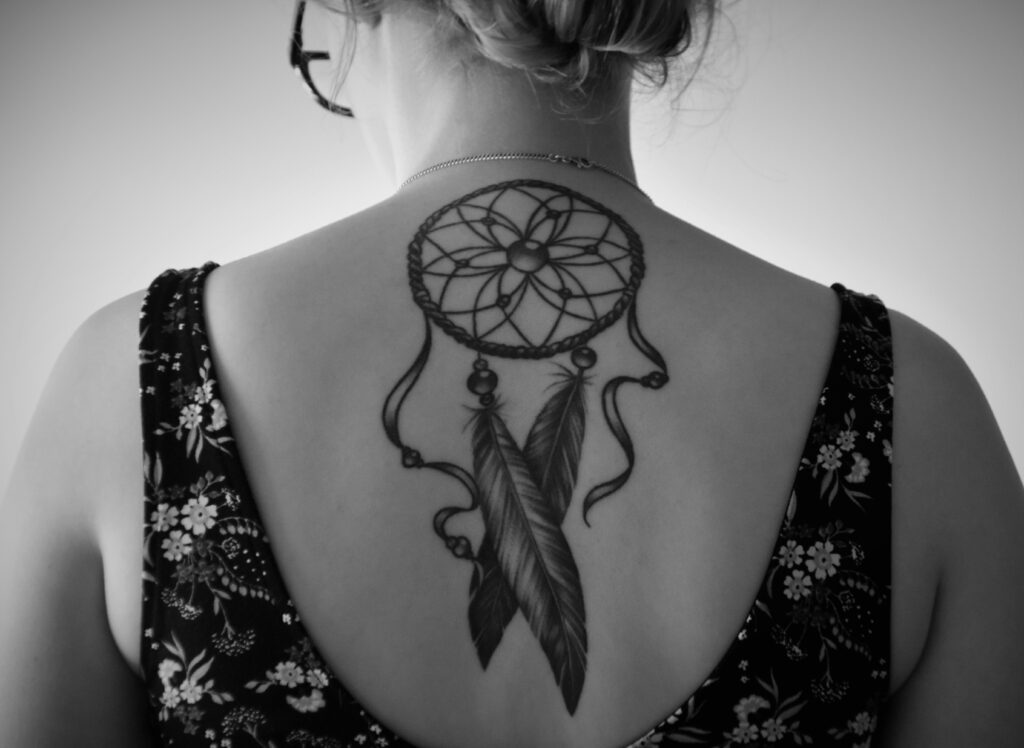
Real talk from a coverup artist in Chicago: 40% of her business is covering up names and couple tattoos.
People get matching tattoos. People break up. People pay double to cover the evidence.
If you want to represent love without the disaster potential:
The Alchemical Marriage Symbol
It’s two overlapping triangles—one pointing up (fire), one pointing down (water). Represents the fusion of opposites into something new.
Perfect for couples because: if things end, it’s still a legitimate alchemical symbol on its own. It means transformation and balance even without the relationship context.
Get it small. Get it somewhere not super visible. Let it be a private thing.
Coordinates of Where You Met (As a Constellation)
Standard move: tattoo the coordinates where you met.
Elevated move: take those coordinates and map the stars visible from that exact location at the exact time. Turn it into a constellation map.
Why this works: if the relationship ends, you still have a piece of astronomical art that represents a moment in time. It doesn’t scream “COUPLE TATTOO” to everyone who sees it.
Your Heartbeat, Encoded
Get an EKG line tattooed. But instead of a generic heartbeat pattern, map it to meaningful dates.
The peaks and valleys correspond to when you met, first date, moving in together, whatever milestones matter. The rhythm isn’t random—it’s your timeline translated into a heartbeat.
If things change, it’s still your story. The other person is part of it, but they’re not the entire symbol.
Symbols of Freedom (Without the Cliché Bird Flying Away)
Breaking free. Liberation. Independence. These matter. The execution usually doesn’t.
Skip the birds-breaking-out-of-a-cage thing. Here’s what works:
The Blank Map
Get an old-style map with most of it blank or labeled “Terra Incognita“—unknown territory.
What it represents: freedom as the ability to write your own geography. You’re not trapped by someone else’s map of how your life should look.
Best for people who’ve left restrictive situations—controlling families, religious constraints, limiting careers.
Place it on your inner forearm where you see it when making decisions.
The Open Door in Negative Space
This requires a good artist. The idea: create a design where the negative space (the absence of ink) forms an open doorway.
It could be visible within a forest scene, formed by the space between architectural elements, whatever. The door is defined by what’s around it, not by what’s there.
Meaning: freedom is both leaving and staying. The door is always open. You’re choosing your position, not trapped in it.
The Cut Puppet String
Visual: a single thin line, severed, with the frayed ends drifting apart.
What it says: freed from control. Autonomy reclaimed.
Why it works: it’s dark enough to feel earned, simple enough to be elegant, specific enough to not be generic.
Place it somewhere you had to perform for others—hands if you work with them, throat if you had to watch your words, wherever makes sense for what controlled you.
Symbols of Death (Beyond Skulls and Reapers)
Death symbolism usually goes goth-scary or memorial-sad. Both miss the philosophical weight.
The Empty Chrysalis
Butterflies represent transformation. Everyone knows that.
Better: get an empty chrysalis. The shell left behind after the butterfly emerged.
It represents the death of the old self. Something had to end for the transformation to happen.
Perfect for people who’ve had to kill their old identity to survive—coming out, leaving religion, escaping abuse, getting clean.
The empty shell is evidence of what was sacrificed to become who you are now.
Memento Mori Hourglass With Meaning in the Sand
Traditional memento mori: “remember you will die.”
In an optimization-obsessed culture where every moment must be productive, an hourglass says “this is finite, act accordingly.”
Twist: the sand at the bottom forms something meaningful. A flower, a face, a word. Death doesn’t just end things—it accumulates.
Visually interesting. Philosophically layered. Doesn’t require explanation but holds up under questions.
Ashes to Specific Flowers
Instead of depicting death as an end, show it as transition. Cremation ashes feeding a specific flower.
The flower matters: use the favorite flower of someone you lost, or a flower that grows in a meaningful location.
It’s the literal truth of decomposition rendered beautifully instead of morbidly. We become food for new life. That’s not sad—it’s cyclical.
Protection Symbols (Without Appropriation)
Most protection symbols—Hamsa, Evil Eye, Sak Yant—are borrowed from cultures where they’re not decorative. They’re ritualized, blessed, earned.
Getting them from a shop in Dallas fundamentally changes what they are.
If you want protection symbolism without cultural theft:
Design Your Own Sigil
A sigil is a symbol you create using a specific method. You can use chaos magic techniques (combining letters of an intention statement) or work with an artist to create something representing your specific protection needs.
The power is that you’re not borrowing someone else’s magic—you’re making your own.
Work with a designer who understands symbolic language. Give them concepts, feelings, elements. Let them synthesize it into something unique to you.
The Boundary Line
Protection isn’t always aggressive. Sometimes it’s just a clear “this far, no further.”
Get a solid, bold line that represents a boundary you’ve set and will defend.
It can be geometric (a perfect straight line), organic (like a horizon), or architectural (like a fence).
Best placement: somewhere that divides your body. Around your bicep. Across your chest. Encircling your wrist.
The placement IS the protection—a visible marker of where you and the world meet.
Your Actual Guardian Animal (That You’ve Earned)
Not a random “lions mean protection” thing. Identify an animal that has actually protected you.
Maybe you had a dog that alerted you before a medical emergency. Maybe horses make you feel grounded. Maybe you survived because you were as resilient as a cockroach.
The animal has to have earned its symbolic weight in your life. Otherwise it’s decoration pretending to be meaning.
Symbols That Represent You (The Hardest Category)
“What represents me?” is where people spiral into astrology signs or overcomplicated collages.
Here’s how to do personal symbolism without it being cringe:
The Venn Diagram Approach
Take 2-3 core identities that make you YOU. Artist + parent + scientist. Musician + athlete + introvert. Whatever combination is genuinely unique to you.
Work with a graphic designer to create a clean Venn diagram where those circles overlap. The intersection becomes a symbol that only exists for that specific combination.
The overlap is what makes you different from every other artist, every other parent, every other scientist.
Your Evolution Timeline (Condensed)
Instead of trying to capture “all of you,” show the path that led to current-you.
3-5 small symbolic images in a row, representing major chapters. Keep each symbol simple—should fit in a 1-inch circle.
Example: cocoon → broken chain → blooming flower → mountain peak → open book.
Each one represents a phase. Together they tell a linear story.
Place it somewhere linear—spine, forearm, along a rib.
The Negative Space Self-Portrait
Advanced move requiring serious artistic skill: a composition where your silhouette is the ABSENCE of ink, created by the space between other elements.
What it says: I’m defined by what surrounds me—my context, my choices, my relationships—not by a single trait.
Most flash artists can’t do this. You need custom work. But when it’s done right, it’s stunning.
Cultural appropriation isn’t just “be respectful”—it’s about power.
When you take a sacred symbol from a marginalized culture and wear it as fashion, you’re extracting meaning without enduring the oppression that gave it weight.
Maori Ta Moko isn’t “cool tribal patterns.” It’s genealogy, rank, and cultural identity literally written on the body. You can’t borrow that.
Hindu and Buddhist religious icons aren’t aesthetic choices. They’re devotional objects. Getting Ganesha because you “like elephants” is disrespectful.
The test: Are you part of this culture? If no, are you deeply engaged with it beyond the aesthetics—learning the language, building relationships, participating in practices? If still no, find a different symbol.
Trendy symbols age like milk.
The semicolon was meaningful when Project Semicolon started it. Now it’s so mass-marketed that it’s losing impact.
The infinity symbol was profound when it was rare. Now it’s on every basic jewelry piece at Target.
2019: geometric minimalism was fresh. 2025: it’s the new tribal armband.
If a symbol is all over Instagram, assume it’ll feel dated in 5 years. That doesn’t mean don’t get it—just know you’re time-stamping yourself.
Meaning changes and that’s okay.
The freedom symbol from your 20s might feel limiting in your 40s because you’ve evolved beyond that version of liberation.
The memorial tattoo that helped you grieve might become painful when you’re ready to move forward.
This doesn’t mean you made a mistake. It means you’re still growing.
Your options:
- Add to it to shift the meaning
- Cover it as a transformation statement
- Leave it as historical documentation
- Recontextualize it within a larger piece
All valid. None are failure.
Placement changes everything.
A rose on your hand is a public statement. Same rose on your ribs is private meditation.
Throat tattoos are confrontational. Spine tattoos are hidden elegance.
Location affects who sees it, which affects how you relate to it, which affects its meaning.
Consider sightlines before commitment.
FAQs
Can I get a symbol from another culture if I really connect with it?
Connection isn’t permission. If the symbol is sacred or closed, respect that boundary. Find a different symbol or work with someone from that culture who can guide appropriate usage.
What if my tattoo’s meaning changes over time?
That’s growth, not failure. You can add to it, transform it, or let it stand as documentation of who you were. All approaches work.
How do I make a common symbol unique?
Add specific dates, coordinates, or personal elements. Change the artistic style. Place it somewhere unexpected. Make THIS VERSION unmistakably yours.
Should I get a symbol I want to grow into or one that represents who I am now?
Who you are now. Aspirational tattoos often become reminders of who you’re not. Get it after you’ve achieved the thing, not to motivate you toward it.
What if people misinterpret what my tattoo means?
Decide if you care. Public tattoos invite questions—have a short answer ready. Private tattoos don’t require explanation. Control the depth of disclosure.
Are newer symbols like the semicolon less meaningful than ancient ones?
No. Meaning comes from resonance, not age. The problem is when symbols become trendy fashion instead of earned marks. A recent symbol you’ve lived with beats an ancient one you picked from flash.
How important is placement?
More than most people realize. Hands = public statement. Ribs = private meditation. Throat = confrontational. Location changes context, which changes meaning.
What’s the biggest mistake people make with symbol tattoos?
Getting symbols that sound profound without connecting them to actual lived experience. You can’t borrow meaning. You have to earn it.
Final Remarks
The best tattoo symbols aren’t the ones with the deepest traditional meanings. They’re the ones that create a feedback loop: the symbol reminds you of who you’re becoming, which influences how you act, which makes the symbol more true over time.
That’s the difference between decoration and transformation.
Choose symbols with room to grow. Build in layers that reveal themselves over years. And if you’re not sure? Wait.


